
Introduction
You exercise regularly, follow a healthy diet, and try your best to stay active. But the number on the weighing scale has not changed. This situation is very common and can feel disheartening. Many people wonder why they are not losing weight even after putting in so much effort.
The truth is that losing weight is hard to do. It does not happen only with diet and exercise. There are other factors such as calorie intake, absorption, sleep quality, stress levels, muscle development, and certain medical conditions which affect add up to weight loss
In some cases, improvement is taking place but cannot be seen on a weighing scale. Understanding the essential reasons behind slow weight loss can help individuals make the right changes and stay driven throughout their fitness journey.
This article explains the most common reasons why people may not lose weight even when they exercise and follow a diet. It will also share simple solutions that can help improve results and support a healthy weight loss journey.
Table of Contents
1. Introduction
2. Weight Loss Plateau – A Common Reason for Slow Progress
3. You Might Be Consuming More Calories Than You Realize
4. Muscle Gain Can Mask Fat Loss
5. Poor Sleep and Stress Can Affect Weight Loss
6. Medical Conditions May Slow Down Weight Loss
7. You May Need to Adjust Your Exercise Routine
8. Healthy Weight Loss Takes Time
Weight Loss Plateau – A Common Reason for Slow Progress
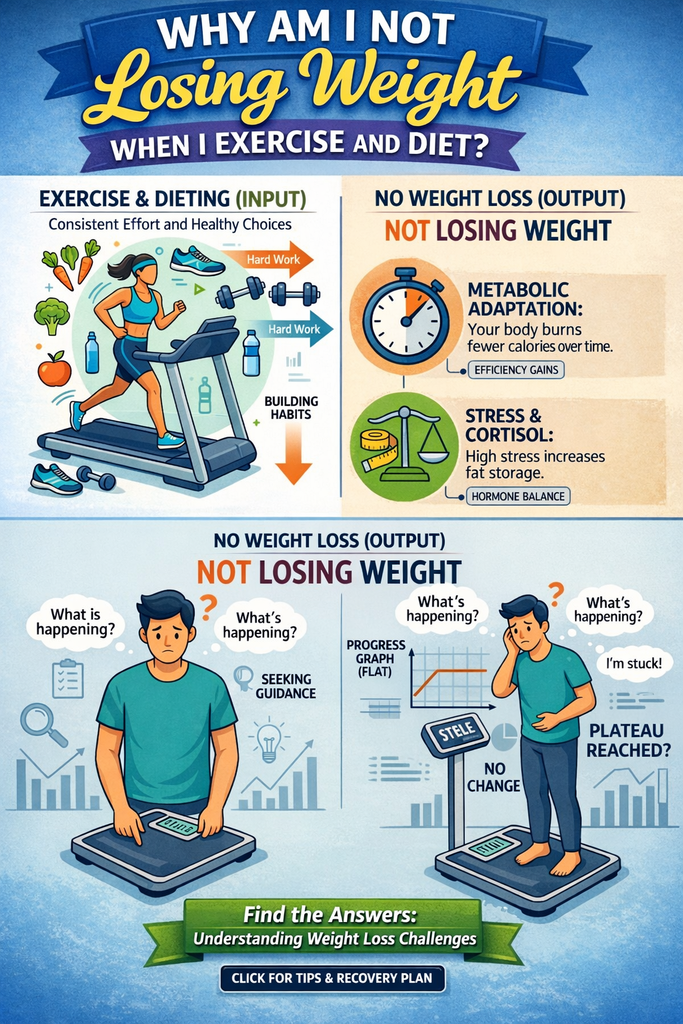
A weight loss plateau is one of the most common reasons people stop seeing progress during their fitness journey. It occurs when the body gets used to a steady diet and exercise routine.
During the early stage of weight loss, the body burns calories very fast because it is adjusting to new activity levels and changes in diet. Over time, however, the body becomes more able and thus begins using less energy to perform the same activities. As a result, the rate of weight loss may slow or temporarily stop.
This metabolic change is a natural process. To break through a plateau, it is often needed to begin with small changes to your routine. Increasing workout intensity, adjusting calorie intake, or including new exercises can help stir up the body and encourage continued progress.
You Might Be Consuming More Calories Than You Realize
Successful weight loss depends on creating a calorie loss. This means your body burns more calories than the calories you eat. However, many people eat more calories than they think without realizing it.
Hidden calories are often found in processed foods, sugary drinks, sauces, and snacks. Even healthy foods can add extra calories if the portion size is too large.
Another common problem is that calories are not tracked properly. When people guess their portion sizes instead of measuring them, they may be underrating how much they are eating.
Keeping a food intake diary or using a calorie-tracking app can help you understand your daily eating habits better. When you become aware of where extra calories are coming from, you can make small changes that support healthy and steady weight loss
Muscle Gain Can Hide Fat Loss
If you include strength training in your workouts, the number on the scale may not always show your real progress.
Strength or resistance training helps your body build muscle and reduce body fat. Muscle is heavier than fat, which means it may weigh more, but it takes up less space in the body.
Because of this, you may be losing fat and gaining muscle at the same time. When this happens, your weight may stay almost the same even though your body is becoming stronger and healthier. This is very common when people first start a proper fitness program.
Instead of checking only your weight, try tracking other signs of progress. You can measure your waist or hips, check your body fat percentage, notice how your clothes fit, or see if your strength and stamina are improving.
Poor Sleep and Stress Can Affect Weight Loss
Sleep and stress have a huge impact on weight loss. Many people focus only on diet and exercise, but rest and mental health are just as important.
When you do not get enough sleep, the hormones that control hunger do not balance correctly. This can make you feel hungry and increase cravings for foods containing sugar or foods that have high calories. At the same time, lack of sleep can make you feel tired and less motivated to exercise.
It is difficult for a person who has stress to lose weight. When the body is under stress, it produces a hormone called cortisol. High cortisol levels are linked to fat storage, especially around the stomach area.
Getting enough rest can help improve absorption and stop the urge to eat extra food. Most experts suggest getting 7 to 9 hours of good quality sleep every night. Activities such as walking, yoga, meditation, or light exercise can also help reduce stress.
Medical Conditions May Slow Down Weight Loss
Sometimes losing weight can be difficult because of certain health conditions.
Some medical issues can affect assimilation and how the body uses energy. These include :
Insulin Resistance
Insulin resistance happens when the body does not respond properly to insulin. This causes higher blood sugar levels and can make weight loss harder.
Type 2 Diabetes
Type 2 diabetes is a condition where the body cannot control blood sugar properly. It can slow absorption and make managing weight more difficult.
Hormonal Imbalances
Hormonal imbalances happen when hormone levels in the body are not balanced. This can affect metabolism, appetite, and how the body stores fat.
These conditions can change how the body processes food, controls blood sugar, and stores fat. As a result, losing weight may become slower or more challenging.
If you are eating well, exercising regularly, and still not seeing results, it could help if you consult with a healthcare professional. A proper medical check-up can help identify any health issues and provide the right treatment.
You May Need To Change Your Exercise Routine.
Every day if you do the same, the body burns less calories
Adding new losing weight exercises to your workouts can help test different muscles and increase calorie burn.
A balanced fitness routine usually includes:
Strength training
Cardio exercises like walking, running, or cycling
High-intensity workouts such as interval training
It is helpful for many people to follow a weight loss program at home or work with a personal trainer who can create a plan based on their needs. A systematic online weight loss program can also help people stay stable and track their progress.
For many women, women’s weight loss training programs provide workouts and guidance designed specifically for their fitness needs.
Healthy Weight Loss Takes Time
Many people expect quick results after they have started to follow a weight loss plan. However, healthy and lasting weight loss usually happens slowly.
Experts say that losing about 0.5 to 1 kilogram per week is safe and sustainable. Losing weight slowly allows the body to adjust and helps maintain muscle.
Instead of depending on the weighing scale alone, it is better to notice other changes. Like you may feel more energetic, become stronger, or find that everyday activities become easy
When you focus on long-term health instead of quick results, it becomes easier to build healthy habits that last.
Final Thought
Losing weight is not as easy as it seems. Even when you exercise regularly and eat healthy foods, weight loss is not happening because of factors like hidden calories, muscle gain, poor sleep, stress, doing the same exercise daily, and also medical conditions.
Understanding these crucial points can help you make better changes in your routine. Taking small steps like improving sleep, tracking food more carefully, or changing your workout plan can make a big difference.
Frequently Asked Questions
Q1. How do you use chia seeds for weight loss?
You can soak chia seeds in water or add them to smoothies, yogurt, or oats. Their high fiber content helps you feel contented for a long time.
Q2. Is a banana good for weight loss?
Yes, bananas provide fiber and natural energy. When eaten in moderation, they can be part of a healthy weight loss diet.
Q3. Which dry fruit is best for weight loss?
Almonds and walnuts are great options because they contain healthy fats, protein, and fiber that help control hunger.
Q4. Is peanut butter good for weight loss?
Peanut butter can support weight loss if eaten in small portions. It provides healthy fats and protein that help keep you full for a long time.
Q5. How do you reset your metabolism?
You can support your metabolism by building muscle, eating enough protein, staying active, and getting enough sleep every night. A personal trainer can guide you with the right workouts and healthy habits to improve your metabolism.