Introduction
If you have ever looked for a workout program on the internet, you have probably seen the terms resistance training, strength training and weight training. One website says you should use resistance bands. Another website says you need to use a barbell. A third website says you can just use your body weight. This is really tiring. It is confusing.
The truth is that these three terms sound like they mean the thing but they are not the same. Understanding the difference between resistance training, strength training and weight training is important if you want to choose a plan that actually works. Not a plan that makes you sore and frustrated.
This guide will help you understand “Resistance Training vs Strength Training vs Weight Training” once and for all. You will learn what each of these training styles means, which one is best for your goals and how to find a fitness workout that fits your life. Whether you are just starting out with a woman who wants to improve your bone health or someone who is getting back to exercise after a break this guide is, for you.
When you finish reading this you will know which path to take with resistance training, strength training and weight training. And you will have a clear plan to get started with your fitness workout training today.
Define the Three Types of Training
What is Resistance Training?
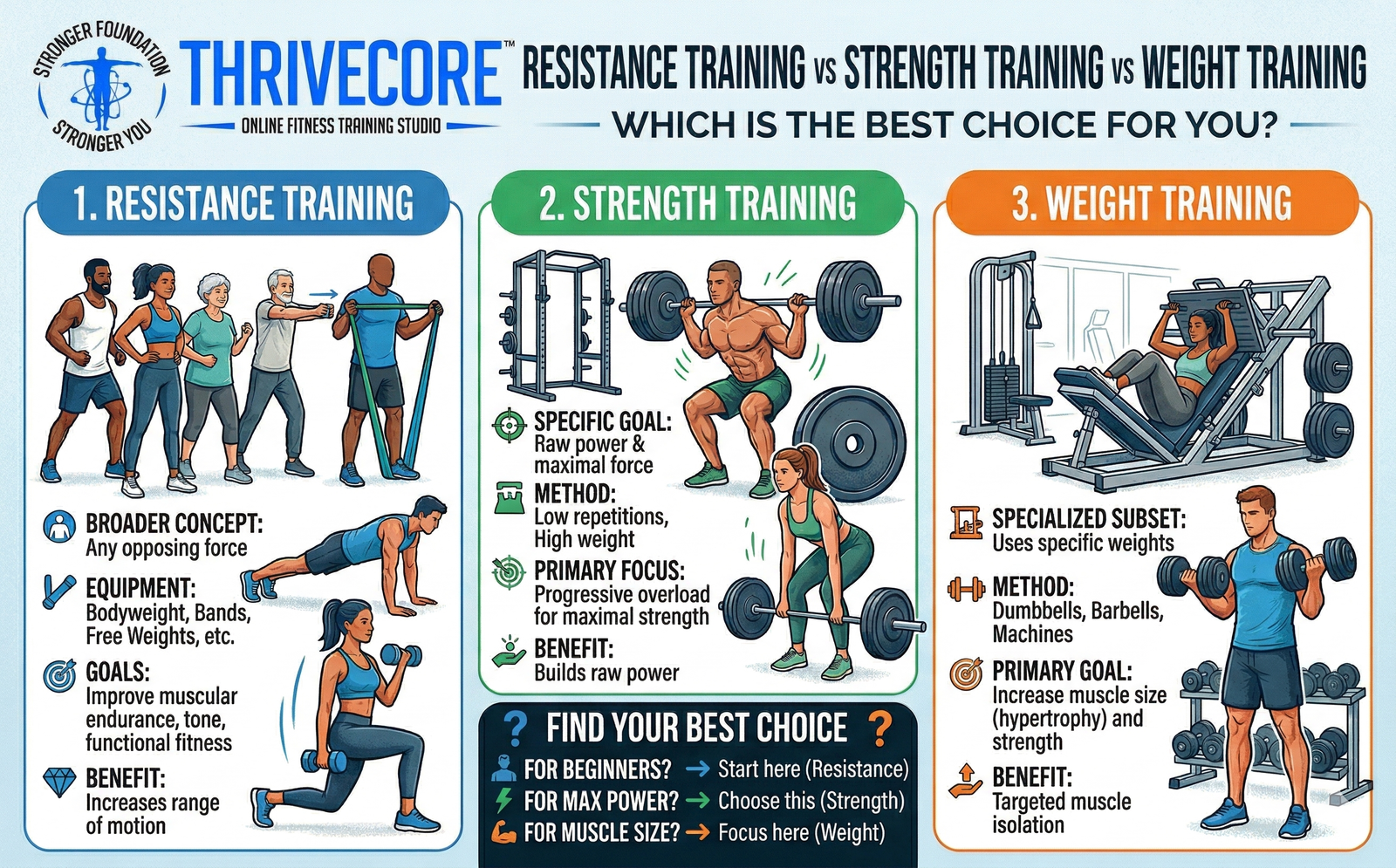
Resistance training is a category which includes any exercise where your muscles work against external force. It could be a dumbbell, a resistance band, body weight or even a heavy bag of groceries.
Tools used: Bodyweight, resistance bands, dumbbells, kettlebells, cable machines, medicine balls, suspension trainers like TRX
The main goals are:
- Good muscular endurance
- Improved body tone
- Functional fitness for everyday
- Joint stability
Reps: Usually you do 12 to 20 reps with weights that are not too heavy.
Some examples are:
- Push-ups
- Glute bridges with a band
- Pilates exercises
- Squats while holding one dumbbell at your chest
Who can do it: Everyone. Beginners, people, women in postpartum, anyone in physical therapy and athletes all can do resistance training.
It is the easiest way to start being fit. Resistance training is great for everyone. It helps you get fit without being too hard on your body.
What is Strength Training?
When you do strength training you are doing a kind of resistance training. The point of this is not just to move your body, it is to make your muscles as strong as they can be. This means you will be lifting weights doing a few repetitions and then resting for a long time.
Tools used: Barbells, heavy dumbbells, weight plates and special machines that are made for strength training.
The main goals are:
- Maximal Voluntary Contraction (MVC)
- Neuromuscular efficiency
Reps: Usually you will be doing somewhere between 1-6 reps of each exercise. You will be using heavy weights. You will also be resting for a time usually three to five minutes to give your body time to recover.
Some examples of strength training exercises include:
- heavy barbell back squats
- Deadlifts
- bench press
- Weighted pull-ups
Strength training is for people who have been exercising for a while, athletes who play sports that require a lot of power or anyone who wants to feel really strong. It is also a way to keep your bones healthy as you get older.
What is Weight Training?
Weight training is about exercising with weighted tools. This is where people get confused. Weight training helps with strength building but it uses the concept of hypertrophy and just to get fit in general.
Tools used: Dumbells, barbells, kettlebells, weight machines, cable stacks
The main goals are:
- Building muscle
- Better body composition
- General conditioning
Reps: Usually you can do 8 to 15 reps with a weight that’s not too heavy and not too light. This is a way to make your muscles grow and it is also when you start to feel that burn in your muscles like when you are in a gym class.
Some examples of weight training are:
- Dumbbell shoulder press
- Lat pulldowns
- Bicep curls.
Weight training is for people who go to the gym. If you have ever picked up a dumbbell to try to make your muscles bigger or to tone up then you have done weight training.
Side-By-Side Comparison Table
| Factor | Resistance Training | Strength Training | Weight Training |
| Definition | Any exercise using external resistance | Training specifically to maximize force/strength | Exercise using weighted equipments |
| Tools Used | Bands, Body weights, Free weights, Machine | Barbells, Heavy Dumbells, Machine | Dumbells, Barbells, Weight machine |
| Primary Goal | Endurance, Tone, General Fitness | Maximum Strength, Power Output | Muscle size, Tone, General Fitness |
| Rep Range | 12-20 | 1-6 | 8-15 |
| Injury Risk | Lower | Higher | Moderate |
| Best For | Beginners, Rehab, Women, All levels | Athletes, Powerlifters, Advanced | Most gym goers, General Population |
| Bone Density | Moderate Benefit | High Benefit | High Benefit |
| Calorie Burn | Moderate | High | Moderate-High |
If you’re exploring structured training styles, check out our guide on Circuit Training for Fat Loss benefits and how to get started for a balanced, full-body approach.
Benefits Deep-Dive: Why Each Type of Training Matters
Benefits of Resistance Training
Resistance training is really good for you when you want longevity. It is not about looking good, it is about being able to move around easily for the rest of your life.
- Improves daily function:
Resistance training improves your everyday life. For example carrying groceries, picking up kids and climbing stairs all become easy to do.
- Reduces risk of injury:
Resistance training also helps prevent injuries. It makes the connective tissue strong. It helps with muscle stability which you might not get worked on when you are lifting heavy weights.
- Improves metabolic health:
Resistance training is great for your metabolic health. It is recommended to do resistance training at least two days a week to help control your blood pressure and cholesterol.
- Helps with mental health:
Resistance training supports your mental health. Studies have shown that doing resistance exercises can help reduce feelings of anxiety and depression.
Benefits of Strength Training
Strength training can change your body’s capabilities. It is an excellent way to get stronger muscles and better endurance.
Here are some benefits of strength training:
- High afterburn effect:
When you lift heavy weights your body burns more calories for a long time even after you are done for up to 38 hours.
- Improves bone density:
Lifting heavy weights can signal your bones to grow denser. Having good bone density is essential for aging people.
- Improves posture and stability:
Doing squats and deadlifts makes the muscles in your back and stomach work really hard which helps your posture and stability stronger than anything else.
Strength Training for Women- Why It Matters the Most
Strength training for women is a tool that is not used enough when it comes to women’s health. Let us get one thing straight now: lifting heavy weights will not make women bulky. Women do not have as much testosterone as men do. So what women will get from strength training is a lean and strong body that can handle a lot.
Here are the reasons why women should do strength training:
- Bone Density:
5-7 years after women go through menopause they can lose a lot of bone density. If you start lifting heavy weights and strength training it can prevent osteoporosis.
- Hormonal Regulation:
When women do strength training it helps their bodies handle insulin better. This is very important for women who have PCOS or who are going through perimenopause and gaining weight.
- Confidence Boost:
Women feel really good about themselves when they can lift things. It makes them feel strong and able to handle things outside of the gym. It helps women build resilient bodies. Women who do strength training are healthier and happier
Benefits of Weight Training
You can use weight training to build muscle, lose fat and to improve endurance.
- Muscle hypertrophy:
It is scientifically proven that about 8-15 reps with moderate weights can help maximise muscle growth.
- 24/7 calorie burner:
When you have muscle your body burns more calories all the time even when you are sitting at your desk. This means you can burn calories 24 hours a day 7 days a week.
- Accessible:
You do not need to go to a gym to do weight training. You can buy a pair of dumbbells that can be made heavier or lighter and use them at home to do a weight training workout.
How to Choose Right Training Method
| Your Goal | Recommended Training Type | Suggested Online Program Type |
| Lose weight and tone up | Resistance Training | Best Fitness Programs Online (full-body) |
| Build raw strength | Strength Training | Best Workout Program Online (powerlifting) |
| Muscle size | Weight Training | Best Workout Program Online (hypertrophy) |
| Improve bone density | Weight + Strength Training | Fitness Workout Training Online (progressive overload) |
| Women’s health & longevity | Resistance + Strength Training | Strength Training for Women programs |
| Beginner/ just starting | Resistance Training | Best Fitness Programs Online (beginner-friendly) |
| Rehab/ injury recovery | Resistance Training | Online Fitness with Certified Trainers |
Also read : Certified Fitness Coach: Transform Your Training Results Faster & Smarter
How To Get Started: A Simple Beginner Roadmap
Whether you are completely new or returning to working out after a long break, this road map is for you:
- Assess yourself:
Are you injured? Are you a complete beginner? Understand your baseline.
- Start with resistance training:
Begin with bodyweight training for a month (Weeks 1–4). Master simple moves: squats, push-ups on your knees or against a wall, glute bridges and planks. Do these 3 times a week.
- Apply progressive overload:
For example in week 2 do one rep more than last week. In week 3 try adding a resistance band.
- Introduce weights slowly:
Once you have a good form, try dumbbells or kettlebells (Week 5+). Aim, for 10–12 reps where the last 2 reps feel hard but doable.
- Choose a good workout program:
The best program should show you videos of form and a clear plan. You shouldn’t have to guess what weight to use next.
- Recovery:
Take 2 rest days a week. Your muscles will get stronger while you sleep and rest, not while you’re exercising.
- Track your progress:
Write down your workouts, the weight you used and how you felt. Count your wins, like doing one push-up than last month. They add up to big changes.
Progressive Overload: The Secret Behind All Three
No matter what kind of training you do there is one thing that helps you get better, progressive overload.
This means you make your workout a little harder, over time. Your muscles get used to workouts if you do the same every day. You will not get stronger, you will just get good at doing that workout. For example if you do the 10 push-ups every day for a year you will not get stronger you will just get good at doing 10 push-ups.
Here are some ways to do it:
- Resistance Training:
You can add a resistance band or you can take more time to do each move like taking 3 seconds to lower down.
- Strength Training:
You can add a little weight to the bar, like 2.5kg.
- Weight Training:
You can add a few repetitions, like do 15 instead of 12 before you add more weight.
The best online fitness programs have this idea built in so you do not have to think about it. You just need to show up and follow the plan. It will help you get a little better each time because progressive overload is part of the plan and progressive overload is what helps you get stronger.
Conclusion
Resistance training, strength training and weight training are not against each other. They work together. Knowing how they are different helps you train better, get rest and achieve your goals quicker. If you are new to working out and want to start or you are a woman who wants to have stronger bones and a fitter body or you are an athlete who wants to perform better there is a workout style and plan that suits your needs.
Are you tired of trying workouts and want to make progress? Check out Thrivecore’s online workout program that guides you through a structured fitness plan. This program takes you from your fitness level to where you want to be, with the help of experts.
Find the Best Workout Program Online for You
Still confused between resistance, strength, or weight training? Let experts guide you with the best workout program online.
Start Your Fitness Journey TodayFrequently Asked Questions
Is resistance training the same as strength training?
Not exactly. Resistance training is a broader term, it means doing exercises with the help of an external force like bands, weights. While strength training is a specific form of resistance training. It uses heavy weights and low reps to grow muscle and endurance.
Can weight training help with weight loss?
Yes, absolutely. Weight training helps with building lean muscle mass, improves metabolism and burns more calories even at rest. The best fitness training programs online combine weight training with a proper nutritional diet to accelerate weight loss results.
Is strength training for women safe?
Yes. Strength training for women is not only safe but highly recommended by professionals. It improves metabolism, hormonal health, bone density and gives longevity to life.
How many days a week should I do resistance training or weight training?
It is recommended to do resistance training or strength training at least 2 days per week. For more advanced goals, 3-5 days per week can help target different muscle groups for optimal results. Most online fitness programs combine training days with sufficient rest days for good recovery.
What is the best workout program online for beginners?
The best online fitness programs for beginners are the ones that start with basic resistance training, include progressive overload and add in rest days for recovery. It includes demonstration videos for proper form and are flexible to home and gym.