
For many adults with arthritis, mornings are the hardest part of the day. Morning joint stiffness, aching knees, and a tight back can make simple tasks like getting out of bed or holding a cup difficult, Thus affecting their daily life and confidence.
If this sounds like your mornings, you are not alone. Millions of people with arthritis go through the same thing every single day.
The good news is that with the right approach, it can be managed, and many people find lasting relief.
In this article, you will learn what causes morning stiffness, why it feels worst right after you wake up, and how making small daily changes including following an arthritis exercise program online can help you move better, feel stronger, and take back control of your mornings.
What Causes Morning Stiffness in Arthritis?
Morning stiffness happens mainly due to inactivity during sleep. When you stay still for hours, your joints don’t get the movement they need to stay lubricated.
So, what happens inside your joints?
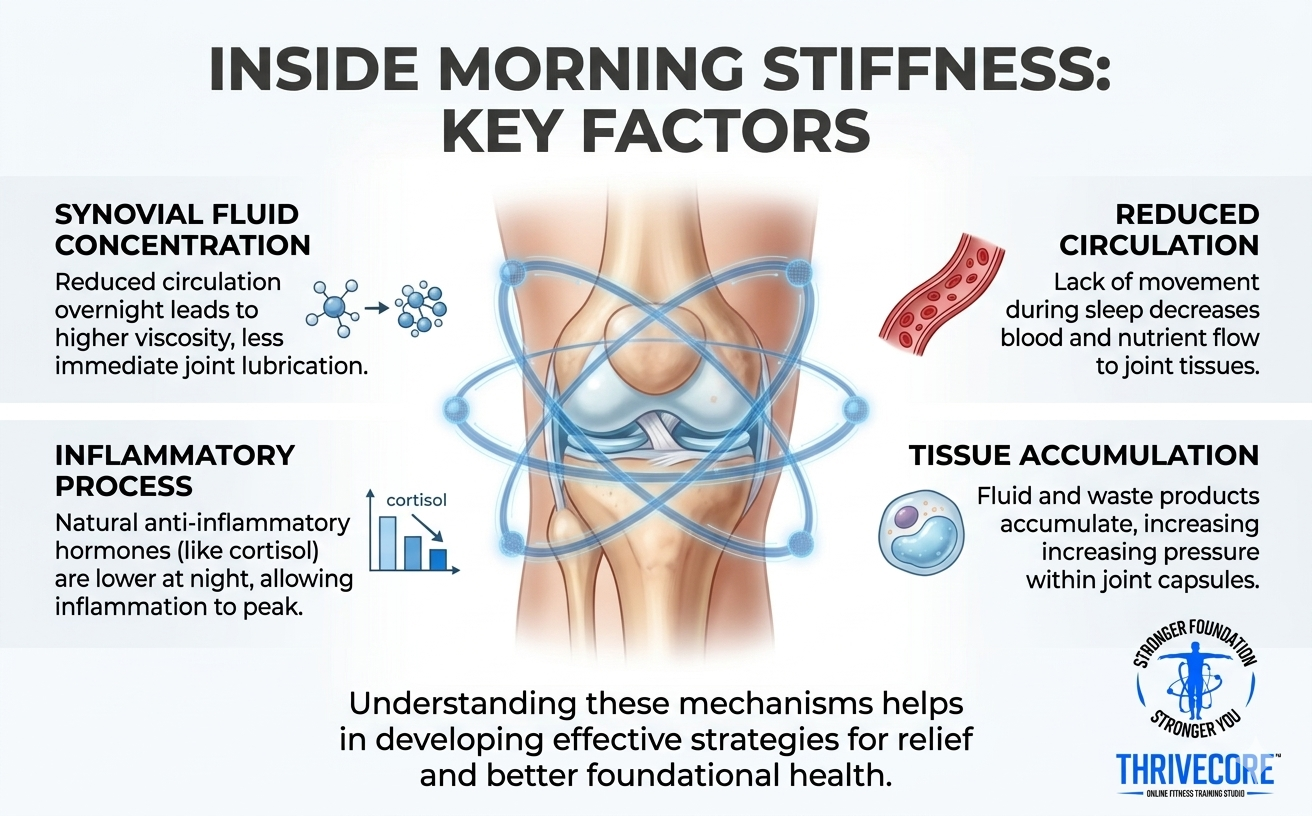
Synovial fluid thickens: This fluid acts like oil in your joints. Overnight, it becomes less fluid, making joints feel stiff like a rusty hinge on a door. It feels stiff when you first move it, but loosens with use.
Inflammation builds up: Inflammation builds up in your joints when you don’t move.
Cortisol levels drop: This natural anti-inflammatory hormone is lowest early in the morning.
Also read : Top 10 Exercises to Relieve Shoulder Pain and Tightness
Why Is Morning the Worst Time? The Science Explained
The Role of Inflammation Overnight
While you sleep, your joints stay inactive. This allows inflammatory proteins to settle in your joints, leading to swelling and stiffness when you wake up.
How Cortisol Affects Arthritis Pain
Cortisol helps control inflammation. But between 2 and 6 am, your body produces less cortisol. This makes your joints more sensitive to pain in the morning.
Joint Dehydration and Cartilage Health
Cartilage absorbs fluid during rest and releases it during movement. When you wake up, your joints need movement to rehydrate and function properly.
Quick Facts
Morning stiffness usually improves within 20–60 minutes
Movement is the fastest way to reduce stiffness
Consistency matters more than intensity
Sources: Arthritis Foundation, Mayo Clinic, NIAMS
Types of Arthritis Most Affected by Morning Stiffness
| Arthritis Type | Morning Stiffness Duration | Primary Cause |
|---|---|---|
| Rheumatoid Arthritis (RA) | 1–3 hours | High inflammation |
| Osteoarthritis (OA) | 15–30 minutes | Joint wear and tear |
| Psoriatic Arthritis | 45–90 minutes | Immune response |
| Ankylosing Spondylitis | 1–2+ hours | Spinal inflammation |
No matter the type, regular gentle movement helps reduce stiffness and improve mobility over time.
7 Tips to Reduce Morning Arthritis Stiffness
You don’t have to accept painful mornings as the norm. These simple habits can make a big difference.
| Tip | What You Should Do | Benefit |
|---|---|---|
| Keep your bedroom warm | Maintain a warm room temperature overnight | Heat relaxes muscles and reduces joint stiffness during sleep |
| Stretch before getting out of bed | Do gentle finger curls, ankle circles, and knee bends while lying down | Prepares joints for movement and reduces morning stiffness |
| Use a heated blanket or mattress pad | Use especially during colder weather or monsoons | Helps keep joints warm and prevents stiffness from cold exposure |
| Hydrate immediately on waking | Drink a full glass of water as soon as you wake up | Supports cartilage health and improves joint function |
| Take medications at the right time | Follow your doctor’s advice on timing (possibly at night) | Helps control inflammation and reduces morning pain |
| Use supportive pillows | Maintain proper joint alignment during sleep | Reduces pressure on joints and prevents stiffness buildup |
Small daily changes lead to big improvements over time. An online arthritis exercise program can help relieve pain.
The Role of Exercise in Managing Arthritis
Exercise is one of the most effective ways to manage arthritis. Many people avoid movement due to pain, but inactivity actually makes stiffness worse.
Here’s how exercise helps:
Improves joint lubrication
Reduces inflammation
Builds muscle support around joints
Enhances flexibility and balance
Best Types of Exercises for Arthritis
| Exercise Type | Purpose / Benefit |
|---|---|
| Low-impact workouts | Are gentle on joints while improving overall fitness |
| Yoga and stretching | Increases flexibility and reduce stiffness |
| Walking | Boosts circulation and supports joint mobility |
| Light strength training | Builds muscle strength to protect joints |
A structured routine from the best online fitness program ensures you stay consistent, safe, and guided especially if you have joint limitations.
How ThriveCore Helps You Improve Arthritis
Managing arthritis requires more than random exercises. You need a structured, safe, and personalized approach – and that’s where ThriveCore makes a difference.
ThriveCore offers a dedicated arthritis exercise program online designed specifically for people dealing with joint pain and stiffness.
What Makes It Effective?
Joint safe workouts: Low impact and medically guided
Certified trainers: Focus on correct form and injury prevention
Personalised routines: Adapted to your condition and progress
Accessible from home: No gym needed, fits your schedule
Progress tracking: Helps you stay consistent
Within weeks, many users report:
- Reduced morning stiffness
- Better flexibility
- Increased energy levels
If you’re looking for the best fitness training program that prioritizes your joint health and real-life movements, not just workouts, ThriveCore provides a reliable and supportive solution.
Case Study: Functional Recovery & Morning Mobility Improvement
Client Name: Rajeev
Age: 54
Occupation: Marketing Director
Location: Pune
Condition: Chronic knee and finger stiffness (3+ years), reduced morning mobility, difficulty with stair navigation
Initial Assessment
Rajeev presented with:
Prolonged morning stiffness (45 minutes)
Limited joint mobility in the knees and fingers
Reduced functional capacity (avoiding stairs, slow gait)
Fear of movement due to pain
Primary Goal:
Restore pain-free morning mobility and improve functional independence for daily and professional activities.
Intervention Strategy
A structured, low impact arthritis exercise protocol was implemented under a guided arthritis exercise program online, focusing on:
Joint mobility restoration
Muscle strengthening for joint support
Neuromuscular coordination
Gradual functional reintegration
Daily Training Protocol (25–30 Minutes | 5x/Week)
| Training Phase | Duration | Exercise Prescription | Objective |
|---|---|---|---|
| Warm Up & Activation | 5 min | Controlled joint rotations (wrists, ankles), seated marches | Increase circulation and joint readiness |
| Mobility Training | 7 min | Knee extensions, heel slides, shoulder mobility drills | Improve range of motion and reduce stiffness |
| Strength Development | 10 min | Chair squats, wall push-ups, resistance band rows | Enhance muscular support around joints |
| Balance & Stability | 5 min | Tandem stance, assisted single-leg balance | Improve proprioception and joint stability |
| Cool Down | 3 min | Static stretches + diaphragmatic breathing | Promote recovery and relaxation |
Progression Model
| Phase | Duration | Focus Areas | Key Outcomes |
|---|---|---|---|
| Phase 1 | Weeks 1–2 | Pain free movement patterns Low intensity, high control Habit formation | Improved movement confidence and reduced fear of pain |
| Phase 2 | Weeks 3–6 | Gradual load introduction Increased repetitions Improved joint coordination | Better joint mobility and strength development |
| Phase 3 | Weeks 7–12 | Functional strength integration Stair mobility drills Increased daily step count | Enhanced daily function and independence |
Outcomes
| Timeline | Performance Outcome |
|---|---|
| Week 6 | Morning stiffness reduced from 45 minutes to10 minutes |
| Week 8 | Improved stair navigation and gait efficiency |
| Week 12 | Achieved 6,000+ daily steps without discomfort |
| 3 Months | Full return to travel and work- related mobility |
Client Feedback
“Mornings used to be painful and slow for me. Now, I’ve completely recovered, no stiffness, no discomfort. I can move freely again, and it has changed my daily life.”
Trainer’s Note
This case highlights the effectiveness of:
Structured low impact training
Consistent movement therapy
Progressive overload adapted to joint tolerance
A personalized approach through the best fitness training program ensures long term dedication, safety, and measurable functional outcomes especially in clients managing chronic joint conditions.
Move Better Every Morning with Expert Guidance
Train smarter with structured programs designed by professionals for safe recovery and strength.
Get Your Personalized PlanWhen to See a Doctor About Morning Arthritis Pain
While morning stiffness is common, you should consult a doctor if:
Stiffness lasts more than 2 hours regularly
Pain worsens over time
You notice swelling or redness
Daily activities become difficult
A healthcare professional can guide medication and ensure your exercise routine is safe. Combining medical care with a structured movement plan gives the best results.
Conclusion
Morning arthritis pain is not something you simply have to live with.
Science explains that synovial fluid thickening, cytokine peaks, cortisol dips, and cartilage dehydration all combine to make mornings the hardest time of day for arthritis sufferers.
But with the right habits and treatment by experts who understand the science of joints ,morning stiffness can be reduced and managed effectively.
ThriveCore’s arthritis exercise program online was built exactly for this. Joint safe workouts. Expert guidance. Real results. All from home, at your pace.
Start where you are. Move how you can. Let the best fitness training program for arthritis help you reclaim the mornings you deserve.
Start Your Arthritis Exercise Program Online with ThriveCore Today.
Frequently Asked Questions (FAQs)
1. What is the number one worst food for arthritis?
The worst food for arthritis is processed sugar. Sugary foods like sweets, soft drinks, and packaged snacks increase inflammation in the body, which can worsen joint pain and stiffness. Reducing sugar intake can help manage arthritis symptoms better.
2. Can massage help arthritis?
Yes, massage can help with arthritis. It improves blood flow, reduces muscle tension, and eases joint stiffness. Regular gentle massage may reduce pain and improve flexibility, especially when combined with exercise and proper treatment.
3. What vitamin deficiency causes arthritis?
A deficiency of Vitamin D is commonly linked to arthritis. Low Vitamin D levels can weaken bones, increase joint pain, and worsen inflammation. Maintaining adequate Vitamin D through sunlight, diet, or supplements can support joint health.
4. What type of arthritis is most painful?
Rheumatoid arthritis (RA) is often considered the most painful type. It is an autoimmune condition that causes severe inflammation, swelling, and joint damage, leading to intense pain and stiffness, especially in the morning.
5. What not to do for arthritis?
If you have arthritis, avoid these common mistakes:
Do not stay inactive for long periods
Avoid high impact exercises that strain joints
Do not ignore pain or swelling
Avoid unhealthy foods like processed sugar and fried items
Do not skip prescribed exercises or treatment
6. What is the 2 hour pain rule?
The 2 hour pain rule means your joint pain after exercise should not last more than 2 hours. If it does, reduce intensity. Thrivecore arthritis exercise program online uses this rule to create safe, guided workouts for better recovery.