
For healthy weight gain, 2-4 tablespoons of peanut butter per day (380–570 calories) is the recommended amount. The exact number depends on your body weight, activity level, and daily calorie goal.
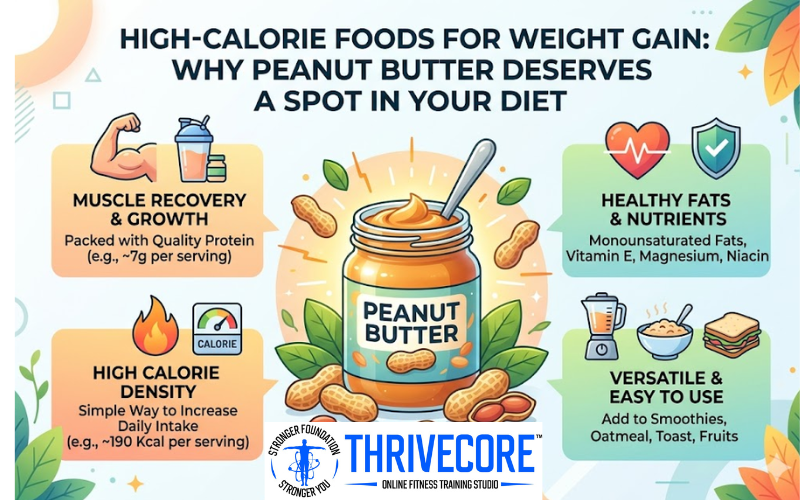
Peanut butter is one of the generally have more as compare to natural foods availablelike : just 2 tablespoons deliver 190 calories, 7–8 grams of protein, and 16 grams of healthy fat. It is beneficial for someone who struggling to eat enough, that makes it one of the easiest ways to hit a calorie surplus without feeling stuffed.
In this guide, you’ll find out exactly how much peanut butter suits your goal, when to eat it, and how to combine it with the right foods for maximum weight gain designed by a personalised plan from ThriveCore’s certified coaches.
What is peanut butter made of?
Basically, peanut butter has simple ingredients, often blended with a bit of oil and salt. Some commercial versions may also include palm oil and preservatives.
Two types of peanut butter are available in the market: natural and processed. The natural type contains only minimal ingredients, typically just peanuts and salt. Processed food literally contains hydrogenated oils and preservatives, which reduces its nutritional value.
Awareness of peanut butter nutrition starts with reading labels, and choosing natural or minimally processed ones over highly processed ones can be beneficial for your overall weight gain.
Peanut Butter Nutrition Facts: What’s Actually Inside?
A standard 2-tablespoon serving of peanut butter provides the following:
• Calories: ~190 kcal
• Protein: ~7–8 g
• Fats: ~16g (mostly healthy unsaturated fats)
• Carbohydrates: ~6g
• Fiber: ~2g
This nutrient profile makes peanut butter one of the most effective calorie-dense foods available. You get a high calorie intake without needing to eat large quantities of food, ideal for people who struggle to meet daily calorie goals.
The combination of protein and fats also makes it a powerful addition to any weight gain strategy. When looking at peanut butter calories, it’s clear why it’s considered a staple among athletes and fitness enthusiasts.
If you’re looking for plant-based options, protein-rich soya chunks to support weight gain are a great addition to your diet.
Relatable: High Protein Soya Chunk Options for Fitness
How Much Peanut Butter Should You Eat for Weight Gain?
Peanut Butter Intake Calculator
How much peanut butter per day to gain weight?
Definitely, when used correctly, it’s an excellent source for gaining weight.
Weight gain comes down to one principle: a calorie surplus. This means consistently consuming more than your body burns. Peanut butter makes the surplus easy, convenient, and enjoyable.
Using peanut butter for weight gain works for both improving muscle growth and body mass when combined with training. It’s beneficial for hard-gainer athletes and individuals who don’t eat enough.
However, it’s not magic. Like all high-calorie foods for weight gain, peanut butter, when included in the recommended amount in a diet, acts as the best food for weight gain.
Smart weight gain isn’t just about eating more; it’s about knowing your starting point. Your BMI helps you build a personalized, result-driven fitness plan.
Start your journey with ThriveCore, where every plan is built around your body, your goals, and your results.
Gram & Spoon Quick-Reference Guide
| Serving Size | Approx. Weight | Calories | Protein |
1 teaspoon (chammach) | ~6g | ~36 kcal | ~1.5g |
| 1 tablespoon | ~16g | ~95 kcal | ~4g |
| 2 tablespoons (standard serving) | ~32g | ~190 kcal | ~7-8g |
| 4 tablespoons (upper daily range) | ~64g | ~380 kcal | ~14-16g |
Healthy Fats in Peanut Butter: Why They Matter for Bulking
Peanut butter is rich in monounsaturated and polyunsaturated fats, known as healthy fats for bulking. These fats play a key role in hormone production, including testosterone, which supports muscle growth.
Unlike junk foods, unhealthy trans fats are not found in peanut butter. Slow digestion support makes it the best choice for long-term health support. It helps to maintain energy levels throughout the day.
That’s why peanut butter is considered one of the best bulking agents for your fitness journey.
How Much Peanut Butter Should You Eat Per Day for Weight Gain?
For most people, 2-4 tablespoons per day is more than enough. However, the exact amount depends upon your calorie intake.
In a structured muscle gain diet, peanut butter should complement your meals rather than replace them. It works best when added to foods like smoothies, oats, or toast.
Because it’s calorie-dense, overeating can lead to unwanted fat gain. Even when you consume unhealthy foods, portion control is important for healthy weight gain.
Best Ways to Add Peanut Butter to Your Weight Gain Diet
Here are some simple and effective ways to include peanut butter in your meals:
• Peanut butter banana smoothie for post-workout recovery
• Spread on whole-grain toast with eggs for breakfast
• Mixed into overnight oats for added calories
• Spread with rice cakes as a quick snack
• Protein shake blends for best calorie gain
These combinations will make peanut butter one of the universal weight-gaining foods. Pairing it with carbohydrates and protein creates balanced meals that support both energy and muscle growth.
Best Peanut Butter Brands for Weight Gain in India 2026 Comparison
| Brand | Calorie | Added Sugar | Best For |
| Pintola (Classic) | 605 kcal | Yes (unsweetened variant also available) | Frugal bulking |
| MyFitness | ~570 kcal* | Zero sugar | Highest protein |
| Kissan (Crunchy) | 612 kcal | Yes | Daily |
| Sundrop (Regular) | 619 kcal | Yes (unsweetened variant also available) | Widely available |
| Dr. Oetker FunFoods (Crunchy) | 638 kcal | Yes (labelled “sweetened”) | Highest calorie density |
Peanut Butter vs. Other High-Calorie Foods for Weight Gain
Peanut butter compares well with other options:
• Almond butter: Similar nutrition but more expensive
• Avocado: Rich in nutrients but lower in protein
• Whole eggs: Calorie content is lower but has high-quality protein
• Nuts and seeds: Nutritious but less suitable
Among the best foods for bulking, peanut butter is considered a tasty alternative. It’s very easy to use; nutrition-rich and tasty peanut butter stands out for its affordability, availability, and ease of use. Still, combining different high-calorie foods for weight gain ensures a balanced and nutrient-rich diet.
Peanut butter can support weight gain, but combining it with a personalized nutrition plan tailored to your weight gain goals gives the best results.
Who Should Be Careful With Peanut Butter?
While peanut butter is generally safe, some people should be cautious:
• Individuals with peanut allergies
• people trying to lose weight
• People with diabetes
Having awareness about peanut butter helps you make smarter dietary choices. For most people, it remains a healthy addition when consumed in limited amounts.
Who Should Be Careful With Peanut Butter?
• Individuals with peanut allergies
• People trying to lose weight
• People with diabetes
Having awareness about peanut butter helps you make smarter dietary choices. For most people, it remains a healthy addition when consumed in limited amounts.
Peanut Butter vs. Other High-Calorie Foods for Weight Gain
- Peanut Butter vs. Ghee: Both are quite calorie-dense, but peanut butter has important plant-based protein and dietary fiber that simple ghee doesn’t.
- Peanut Butter vs. Oats & Brown Bread: These meals are great friends, not foes. Oats and brown bread supply the carbohydrate base, and peanut butter delivers the concentrated healthy fats and protein to optimize your daily energy.
- Peanut Butter vs. Plain Peanuts: Whole roasted peanuts are excellent for nutrition but peanut butter is far more calorie dense per spoonful and much easier to eat in large quantities without feeling full prematurely.
Peanut Butter for Weight Gain in Senior Women
Peanut butter is a good option for senior women to gain weight in a healthy way. It is naturally full of calories, provides healthy fats and protein and this aids in increasing calorie intake without eating a lot of food.
It is very important for women after menopause to maintain a healthy weight as oestrogen levels decline and they naturally lose muscle mass more quickly, which can lead to losing weight without trying, feeling weak and lower energy levels.
Peanut butter offers roughly 190 calories in just two tablespoons (32 grams) and contains no highly processed ingredients. You can eat it with wholegrain toast, mixed into porridge, or blended into smoothies.
For women over 60, weight gain isn’t just about eating more calories. Bone health matters too. Adding peanut butter to foods which are high in calcium like milk, yoghurt or fortified cereals helps build stronger bones and reduce the risk of osteoporosis. For more tips, check out our postpartum and women’s nutrition resources.
If you are looking for a personalised solution, ThriveCore’s Personal Nutrition Plan is designed for women over 50 and 60, helping support healthy weight gain, muscle retention, and long-term wellness.
Conclusion
Peanut butter is one of the best foods for weight gain due to its high calorie content. It fills you up with recommended nutritional value. When you want healthy weight gain, talk to a certified professional nutritionist or certified fitness coach for smooth gains.
Frequently Asked Questions
Q1. How many calories does peanut butter have per serving?
A. 2-tablespoon serving contains around 180–200 calories.
Q2. Can I eat peanut butter every day for weight gain?
A. Yes, 2–4 tablespoons daily can support healthy weight gain.
Q3. Is peanut butter better for muscle gain or fat gain?
A. With exercise, it supports muscle gain; without it, excess calories may lead to fat gain.
Q4. What is the best time to eat peanut butter?
A. Post-workout, at breakfast, or before bed are all effective options.
Q5. Peanut butter se kitne din mein weight gain hota hai?
A. Agar aap daily 2–4 tablespoon peanut butter lete hain aur apni daily calorie zaroorat se 300–500 kcal zyada khate hain, toh 3–4 hafte mein visible weight gain shuru ho sakta hai. Results depend karte hain aapki body type, metabolism, aur exercise routine par.
Q6. पीनट बटर खाने से वजन बढ़ता है?
A. हाँ, पीनट बटर खाने से वजन बढ़ सकता है, क्योंकि इसमें हेल्दी फैट और कैलोरी अच्छी मात्रा में होती है। अगर आप रोज़ 1–2 चम्मच पीनट बटर को केला, ब्रेड, ओट्स या स्मूदी के साथ लेते हैं, तो यह हेल्दी वेट गेन में मदद कर सकता है। लेकिन इसे सीमित मात्रा में ही खाएं, ताकि शरीर में अनावश्यक फैट न बढ़े।
Q7. Which peanut butter is best for weight gain in India?
For weight gain, choose natural peanut butter with no added sugar or palm oil.
Best Indian options are Pintola (high protein, affordable), MuscleBlaze (gym-focused), and Alpino (natural, clean ingredients),Pintola,Dr. Oetker FunFoods,MyFitness etc .
Always check the label. At least 6g protein and under 2g added sugar per serving is best.
Q8. how many spoons of peanut butter a day to gain weight?
To gain weight, eat 2-4 tablespoons of peanut butter daily. This adds around 300 extra calories, with 7-12g of protein, helping you build healthy muscle mass during your active fitness training.