
If your weight is 80 kg and Want to reduce weight from 80 kg to 55 kg , 60kg, 70kg safely without crash dieting?
Losing 25 kg may sound difficult, but with the right plan, it is absolutely possible.
In this guide we will show you how to res=duce 80kg weight safely with the help of case study of Akash, who successfully reduced his weight from 80 kg to 55 kg in a healthy and sustainable way.
Why Many People Fail to Lose 25 kg
People often struggle to lose weight because:
- They follow extreme diets
- They skip meals
- They do only cardio
- They do not track calories
- They lack guidance and accountability
Akash worked as a software professional and spent most of his day sitting at a computer. His busy routine, irregular meals, and little exercise slowly increased his weight to 80 kg. Realising he needed to take care of his health, he joined Thrivecore, an online fitness training program that gave him the structure and flexibility he needed.
In this article, you will learn simple steps to reduce weight from 80 kg to 55 kg safely. It covers calorie management, healthy eating, exercise, and lifestyle habits for long-term results.
80 Kg to 60Kg Weight Loss Diet Plan
Akash’s trainer first helped him understand the science behind his goal. He needed to reduce his weight from 80 kg to 55 kg, which meant losing 25 kg. The trainer explained that healthy weight loss takes time and patience.
Akash’s Plan
Total weight loss required: 25 kg
Safe timeline: 6–10 months
Main focus: Lose fat while maintaining muscle
Strategy: Maintain a steady calorie deficit
The trainer explained the importance of body composition. Losing weight is not only about the number on the scale. It is about reducing body fat percentage while maintaining muscle strength.
The Body Composition Analyser Tool was recommended by his trainer to monitor progress. This helped him track fat loss and stay motivated.
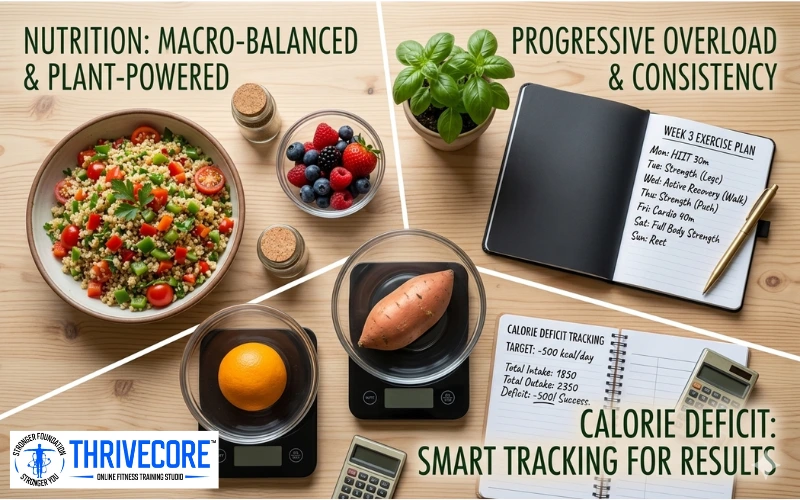
How His Calorie Needs Were Calculated
A fitness trainer helped him understand how calories affect weight loss. So they calculated his Basal Metabolic Rate (BMR). This is the number of calories the body needs for basic functions like breathing and digestion.
For someone weighing 80 kg, daily calorie needs can be around 1800–2200 calories, depending on activity level.
Creating The Right Calorie Deficit
The fitness trainer created a simple and practical plan. The goal was to reduce about 400–500 calories per day, combined with healthy eating and regular exercise. This approach helped Akash lose weight gradually and safely while keeping his energy levels stable.
A Nutrition Plan for Losing 25 kg
The nutrition plan was designed to reduce fat while keeping energy levels stable. Instead of strict dieting, the focus was on balanced meals that controlled hunger and supported metabolism.
Food Category
Vegetables: Spinach, broccoli, carrots, cucumber
Fruits: Apples, bananas, oranges, berries
Whole Grains : Brown rice, oats, quinoa, whole wheat
Lean Proteins: Paneer, lentils, chicken, fish, yogurt
Healthy Fats: Nuts and Seeds
Increasing Protein Intake
Protein became an important part of Akash’s diet. His trainer explained that protein helps maintain muscle mass during weight loss, keeps hunger under control, and supports a healthy metabolism.
Reducing Processed Foods and Sugar
Earlier, Akash consumed many packaged snacks and sugary drinks like soft drinks, packaged chips, bakery items, and fried food. Under his trainer’s guidance, he gradually reduced his daily calorie intake, which helped lower his daily calorie intake.
Portion Control
He learned how to manage portion sizes. This structure helped maintain steady energy levels.
Breakfast: Protein and fibre foods such as eggs or oats.
Lunch: Balanced meal with vegetables, protein, and whole grains.
Snack: Healthy option such as fruit or yogurt.
Dinner: Light but nutritious meal with vegetables and protein.
Want a Plan Like Akash?
Many people try to lose weight alone and get stuck.
A structured plan makes the process faster, safer, and more sustainable.
Exercise Plan to Lose Weight
Akash followed a simple and structured exercise plan designed by his fitness trainer.
Workout Structure: Combination of strength training and cardio exercises supporting fat loss and improving overall fitness
Strength Training: 3-4 sessions per week, including compound exercises such as squats, lunges, push-ups, and rows, helping maintain muscle mass while losing fat
Cardio Training: Activities such as walking, cycling, and jogging increasing calorie burn and improving endurance
Weekly Cardio Target: 150–300 minutes per week supporting steady and sustainable weight loss
30-30-30 Rule: Consume 30 grams of protein within 30 minutes of waking up, followed by 30 minutes of light activity. This helps control hunger and improves metabolism
Morning Routine Example: Breakfast such as eggs or yogurt, followed by a short walk. Improves energy levels and supports healthy habits
Tracking Progress the Right Way
Akash did not rely only on the weighing scale to measure his progress. He also tracked his body fat percentage, waist measurement, energy levels, and improvements in strength.
This helped him understand that he was losing fat while becoming stronger and healthier. He regularly used the Body Composition Analyser Tool to check whether he was losing fat or muscle. This gave him a clearer picture of his progress.
One lesson his trainer repeated often was simple: “Small habits done daily create big results.” He focused on consistency instead of perfection.
Mistakes To Avoid
He did not follow crash diets, skip meals, or rely only on excessive cardio. Instead, he included strength training in his routine and kept track of his calorie intake. Avoiding these mistakes helped him stay consistent and achieve steady progress.
Akash’s Realistic Timeline
Months 1-2: Focused on improving his eating habits and starting regular workouts.
Months 3-5: Fat loss became steady, and his overall fitness started improving.
Months 6-9: Reaching close to his goal weight and improving his body composition.
Final Result: By the end of the journey, he successfully reduced his weight from 80 kg to 55 kg.
Conclusion
Akash’s story shows that reducing weight from 80 kg to 55 kg is possible with the right guidance and a structured plan. Instead of trying quick fixes, he followed a balanced approach designed by his fitness trainer.
The plan focused on maintaining a moderate calorie deficit, eating nutritious meals, and exercising regularly. Strength training helped preserve muscle, while cardio supported fat loss. Tracking body composition also helped him monitor real progress.
His journey proves that with the support of a fitness trainer and a well-planned routine, gradual weight loss of 0.5–1 kg per week can lead to long-term health and lasting results.
What Changed After Losing 25 kg
After reducing weight from 80 kg to 55 kg, Akash noticed:
- Higher energy levels
- Better stamina
- Improved confidence
- Reduced body fat
- Better sleep quality
- Easier daily movement
How Can We reduce Weight From 80 Kg to 50 Kg
Some people ask how to reduce weight from 80 kg to 50 kg that is a los of 30 kg. While it is not easy as it is a big goal but the pattern remains the same like use of healthy diet in balanced amount, regular exercise , consisitent calories deficit. This journey will take few month around 9-14 months to lose weight. You can take help of personal fitness trainer to track your fat loss.
Frequently Asked Questions
1. How long does it take to reduce weight from 80 kg to 55 kg?
Losing 25 kg typically takes 6 to 10 months, depending on diet, exercise routine, and metabolism.
2. How many calories should I eat to lose weight?
Most people need to reduce 400–500 calories from their daily requirement to lose weight safely.
3. Can I lose 25 kg without exercise?
Weight loss is possible through diet alone, but combining exercise with a healthy diet leads to better fat loss and improved body composition.
4. What is the best exercise for weight loss?
A combination of strength training and cardio exercises, such as walking, running, and cycling, is the most effective approach.
5. How can I track fat loss accurately?
Instead of relying only on the weighing scale, track body fat percentage and measurements using tools like a body composition analyzer.
6. Is losing 25 kg safe?
Yes, as long as the weight loss happens gradually through balanced nutrition, exercise, and healthy habits.
7. How to lose weight from 80 kg to 70 kg?
To lose weight from 80 kg to 70 kg, follow a healthy calorie deficit, eat protein-rich balanced meals, do regular cardio and strength training, and stay consistent. Aim for slow, safe weight loss instead of crash dieting so the results are easier to maintain.
8.Can I follow this plan if my weight is 70 kg and my goal is 55 kg?
Yes. By applying same approach you can lose 15 kg weight.
9.What is the best weight loss diet for an 80 kg woman?
The best diet for losing weight is moderate calorie deficit, high protein, high fiber and full of whole foods. Don’t fall into the trap of restrictive fad diets. Instead, concentrate on portion control and lean proteins, vegetables and complex carbohydrates. This will help you get thinner in a sustainable way without sacrificing your energy levels.
10.How much should an 80 kg woman weigh ideally?
Ideal weight is more dependent on your height, muscle mass and body frame than just scale weight. For example, a 5’5” woman might have a target healthy weight range of roughly 53-65 kgs, but the emphasis on body composition and fitness is so much better than trying to hit a number.