Unlock your potential with personalized coaching, live sessions, and expert guidance built for real results.

PCOD/PMOS in women is a hormonal condition that affects 1 in every 5 women today. Irregular periods, unexplained weight gain, mood swings, or excessive facial hair growth are some of the common symptoms. While it can be frustrating, you do not need to worry because it is highly manageable. Making simple changes to your lifestyle, especially through fitness, can make a huge impact. In fact, working with a women’s fitness trainer online can provide you with the personalized guidance you need to manage PCOD/PMOS.
What Is PCOD/PMOS?
PCOD/PMOS in women is a condition where a woman’s ovaries release immature or partially mature eggs, which can develop into small cysts. This leads to a hormonal imbalance, where the body produces slightly higher levels of male hormones (androgens). This imbalance interferes with the menstrual cycle and can cause various symptoms.
Common Symptoms of PCOD /PMOS
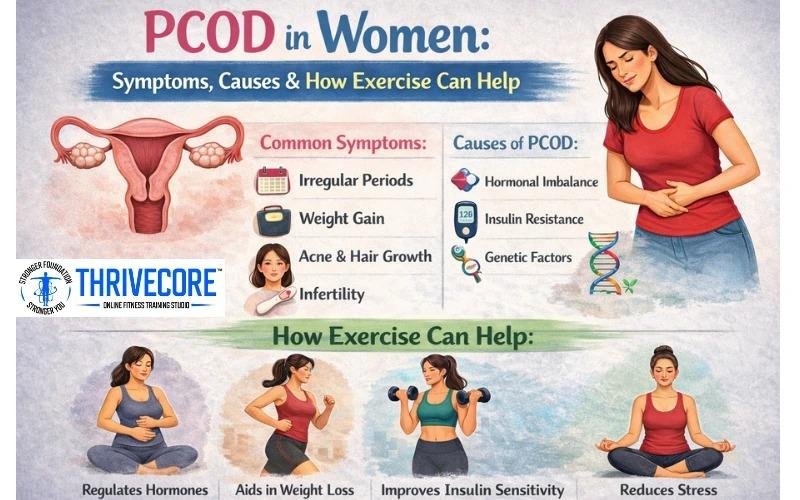
The symptoms of PCOD/PMOS in women can vary from woman to woman, but the most common symptoms include:
- Irregular periods: Delayed, infrequent, or unpredictable cycles.
- Weight gain: Especially around the belly and hips, and difficulty losing weight
- Acne and oily skin: Persistent breakouts due to hormonal fluctuations.
- Hair thinning: Noticeable thinning of hair on the scalp.
- Mood swings: Increased anxiety, fatigue, or irritability.
Concerned About PCOD/PMOS or Hormonal Imbalance?
Use our smart PCOD/PMOS Risk Analyzer to check your symptoms and get instant insights about your health.
Analyze Your PCOD/PMOS Risk →What Causes PCOD/PMOS?
There isn’t one single cause for PCOD/PMOS in women, but several factors contribute to its development.
• Hormonal Imbalance: Excess production of androgens disrupts normal ovulation.
• Insulin Resistance: Many women with PCOD/PMOS have bodies that don’t use insulin effectively, which can lead to weight gain.
• Poor Lifestyle Habits: A diet high in processed foods and a lack of physical activity can worsen symptoms significantly.
How Fitness Helps Manage PCOD/PMOS
Exercise is one of the most powerful tools for managing PCOD/PMOS in women. Regular physical activity directly targets the root causes of the condition. It helps improve insulin sensitivity, which allows your body to regulate blood sugar levels and weight management more effectively. It also helps lower stress hormones like cortisol, which can trigger hormonal imbalances and increase inflammation in the body.
This is where professional support comes to your rescue. A woman fitness trainer online can design a program that fits your specific needs. Furthermore, an online fitness coach for women in India understands lifestyle challenges and can create routines that fit the Indian lifestyle, ensuring you stay consistent and see real results.
Best Exercises for Women With PCOD/PMOS
You don’t need a gym to manage PCOD/PMOS. A mix of these workouts done at home can work wonders:
• Strength Training: Building muscle through squats, lunges, or resistance bands boosts your metabolism and improves insulin resistance.
• HIIT (in moderation): Short sets of intense activity (like jumping jacks or mountain climbers) are great for fat loss but should be balanced with rest to avoid stress on the body.
• Yoga: Poses like Cobra and Child’s Pose are excellent for reducing stress and improving blood flow to the pelvic area.
• Walking: A simple 30-minute brisk walk daily can improve heart health and aid weight management.
• Core Workouts: Pilates or specific core exercises help build stability and reduce discomfort.
Conclusion
Living with PCOD/PMOS can be challenging, but it doesn’t have to control your life. By understanding your body and incorporating the right kind of movement, you can balance your hormones and boost your energy. You don’t have to do it alone; having the right support system is key to staying motivated. At Thrivecore, we specialize in helping women take control of their health through expert-led fitness programs designed specifically for hormonal balance and PCOD/PMOS management.
Frequently Asked Questions
Find answers to the most common questions about PCOD/PMOS in women.