

Home >> Program >> Online Parkinson’s Exercise Program

Online Parkinson's Exercise Program

Move with more confidence—
one live coach,
built around your Parkinson's.

Practice balance, strength, walking, and independence with live 1-on-1 coaching from the comfort of home. Every session adapts to your symptoms, stage, and medical clearance—no pre-recorded videos.
✓ Early & mid-stage friendly
✓ Live 1-on-1, not pre-recorded
✓ Caregiver included

1000+ Lives transformed
15+ Expert Coaches
10+ countries served

Book A Consultation With Our Experts in ₹250

Parkinson Form (#36)
Free self-assessment

Your Daily Function Score

A few quick questions about how your body moves through an ordinary day — no equipment, no clinic visit.

Yes, easily With effort No
Yes Sometimes No
Never Occasionally Often
None 1–2 3+
Very Somewhat Not confident

This self-assessment is for general informational purposes only. It is not a medical diagnosis and does not replace advice from a qualified healthcare provider.

🎯
Your score will appear here

Answer the questions on the left and tap "See My Function Score" — your personalized result and next step will show up right here.


Get your full report by email 👇

How exercise helps Parkinson's

Falls affect an estimated 45–68% of people with Parkinson’s each year, most commonly linked to balance impairment and freezing of gait. Research on exercise and motor training shows meaningful improvement in balance-related performance, even where its effect on fall rates specifically is still being studied and depends on disease stage.

Physical activity is also linked to markers of neuroplasticity — the brain’s ability to build and strengthen movement pathways through repetition — which is part of why consistent, progressive practice tends to matter more than any single “magic” exercise.

Exercise complements medical care — it doesn’t replace it. We coordinate around your neurologist’s guidance and medication schedule, never instead of it.

What consistent, guided movement can support

What is Parkinson's disease?

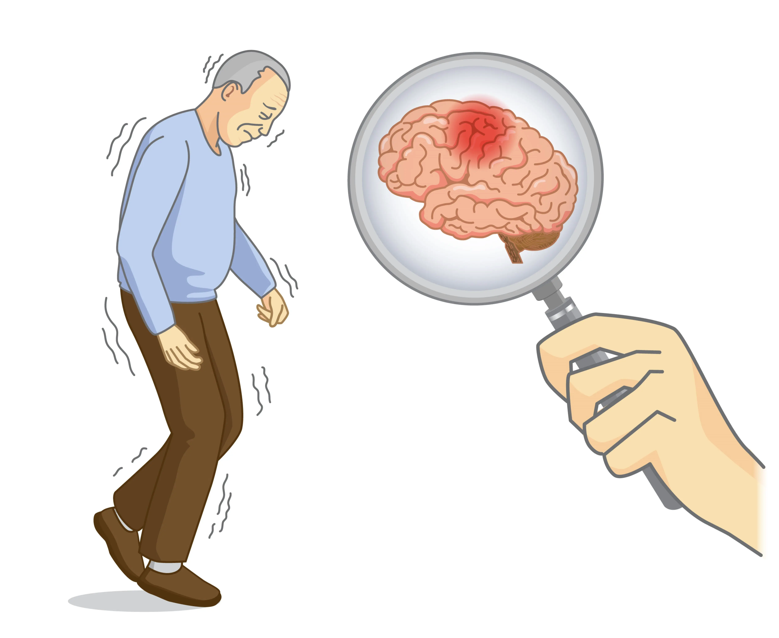
Parkinson’s is a progressive neurological condition that affects how the brain coordinates movement. It develops gradually, and how it shows up varies a lot from person to person.

Motor symptoms often include tremor at rest, muscle stiffness (rigidity), slowness of movement (bradykinesia), stooped posture, smaller steps, and episodes of “freezing” where the feet feel briefly stuck to the floor.

Non-motor symptoms are just as real, even though they’re talked about less — fatigue, sleep disruption, low mood, softer voice, and slower thinking speed can all be part of the picture.

Exercise doesn’t change the underlying condition, but it directly targets many of these symptoms — which is why movement is now considered a core part of living well with Parkinson’s, alongside medication and neurology care.

Who Should Join This Program?

People newly diagnosed who feel unsure about how to start exercising safely.

Individuals living with early-stage Parkinson's who want to maintain their mobility.

People with mid-stage Parkinson’s who have reduced mobility or stiffness.

Anyone who has episodes of freezing or feels unsteady on their feet when walking.

People who have fallen before, or who are starting to be afraid of falling.

Caregivers who want to learn safe techniques to support their loved ones at home.

Adults of any age, including those with young-onset Parkinson's disease.

Medical Clearance Disclaimer: To keep you completely safe, please consult your primary neurologist for clearance before starting if you have advanced-stage Parkinson’s with severe cognitive impairment or dementia, severe uncontrolled involuntary movements (dyskinesia) that make unassisted movement unsafe, unstable heart conditions, uncontrolled high blood pressure, recent cardiovascular events, recent major surgeries, or unhealed bone fractures.

Other Program We Have

What's Included

Live weekly coaching

You meet face-to-face over video with the same dedicated coach (typically 2 to 3 sessions per week). Your coach gives real-time visual and verbal cues to correct your posture and form instantly.

Session recordings

We record every session so you and your caregiver can replay specific movement cues for safe practice between live calls.

Progress tracking

We periodically re-test your mobility using the Daily Function Score self-reflection tool to track your practical, real-world gains over time.

Family & caregiver guidance

We give your family members a clear briefing on how to safely assist your movement without taking away your independence or overcorrecting you.

Structured progression

We advance your exercises step-by-step based on your daily energy and balance—you face no unexpected jumps in difficulty.

Between-session support

You get WhatsApp access to your coach between sessions for quick questions about form, symptom changes, or scheduling.

Exercise Categories We Draw From

Strength

Your legs, hips and core get stronger so it’s easy to get out of bed, chairs and cars.

Balance

We combine drills for static and dynamic stability that train your body to gracefully catch and recover itself from a stumble.

Walking and Gait

We use rhythmic beats and visual cues to help you take larger steps and work through sudden freezing.

Posture

We work to open the chest and strengthen the back muscles to combat forward stooping and help you stand tall.

Coordination

We do cross body movements to wake up your nervous system and sharpen the brain to muscle signals.

Dual-tasking

We challenge you to walk safely while doing additional tasks, such as walking while having a conversation.

Breathing

We work on deep belly breathing and voice projection to support your posture and keep your speaking voice clear and strong.

Flexibility

We gently stretch tight muscles and stiff joints to aid you in moving more freely in your day-to-day life.

Your Program Roadmap

  1. 1

    Week 1: Assessment

    We’ll do your health screen and go over your Daily Function Score with you. Your coach learns your routine, and sets specific mobility goals based on your day-to-day life.

  2. 2

    Week 2: Foundations

    You learn the correct movement form with low impact drills, seated or standing. Your coach will teach you posture, breath control and how to safely shift your weight to create a stable base.

  3. 3

    Week 4: Building

    As your leg and core strength increases your coach introduces standing balance challenges. You run your stepping drills, your posture alignments to keep you steady on your feet.

  4. 4

    Week 8: Integration

    We incorporate rhythmic gait cues, dual-tasking drills and transfers into functional movement everyday. You do walking, talking, getting up from chairs, so you can get around easily at home.

  5. Week 12: Review

    We re-evaluate your progress with your Daily Function Score to celebrate your gains in strength and balance. Then your coach tells you what’s next in your program so that you can keep moving forward.

What clients typically work towards

Safety comes first

How This Compares To A Video-Library Program

Feature Pre-recorded video library Unsupervised home exercise ThriveCore ✦
Live, 1-on-1 coach
Medical screening before starting
Real-time form correction
Adjusts to your “on/off” medication windows Rarely
Caregiver briefing included
Progress re-scored periodically Self-tracked

Client Stories

Rajesh Sharma Mumbai

After four weeks of practicing rhythmic stepping cues with my coach, I felt steady enough to walk to my local market alone for the first time in over a year. Having real-time feedback made all the difference when my feet felt stuck.

Sarah Jenkins London

The caregiver briefing was very helpful. I used to anxiously try to physically hold my husband up, which was unsafe. The coach showed me exactly how to guide his hips safely without pulling or taking away his independence.

Ananya Patel Bengaluru

I started four months ago completely seated because standing felt terrifying. We moved gradually—from seated core strength to standing balance, and now dual-tasking. It wasn't overnight, but getting out of low chairs is easier now.

Frequently Asked Questions

No. Exercise doesn’t cure or reverse Parkinson’s. It’s a well-supported way to help maintain balance, strength and quality of life alongside your medical care, never a replacement for it.

Yes freezing is common, and your coach builds specific cueing strategies (rhythm, visual and verbal cues) around it rather than avoiding movement altogether.

No. Most work starts bodyweight and chair-based. A resistance band may be suggested later, and your coach will tell you exactly when.

We work alongside your physiotherapist and neurologist, not instead of them — think of this as the consistent, ongoing exercise layer between clinical appointments.

Your space is checked for fall-safety before sessions start, a caregiver protocol is agreed in advance, and your coach is trained to stop and reassess at the first sign of instability.

Generally sessions are timed to your “on” window when movement is easiest and safest. Your coach will help you find the right time of day.

Yes, and it’s encouraged. Caregivers receive a short briefing so they know how to support safely between sessions too.

Yes, and it’s encouraged. Caregivers receive a short briefing so they know how to support safely between sessions too.

Your next step doesn't have to be a big one.

Schedule a free 30-minute consultation with a fitness advisor to discuss your mobility challenges & get your Daily Function Score reviewed. No obligation. No pressure. No catch.

Related Blog

Loading related posts...

Scroll to Top