ThriveCore’s Senior Strength Training Program is a live, coach-led online program for adults aged 55 and above. It helps build muscle strength, bone health, balance and everyday independence through safe chair-based or standing exercises, with a safety check before you start. Book a free assessment at thrivecore.in.
A live, coach-led workout program made around your fitness level and health needs. A real class with a real coach, not a one-size-fits-all video.
Senior strength training is a structured resistance program designed for adults over 50 to build muscle strength, protect bone density and maintain daily independence.
Unlike heavy bodybuilding for younger adults, senior-focused programs prioritize safe functional movements, joint stability, balance and gradual progression.
But strength training is different from general senior fitness, that might include walking, balance work or flexibility exercises.
A strength program may look different depending on a person’s starting point:
Use your own body weight and a sturdy chair.
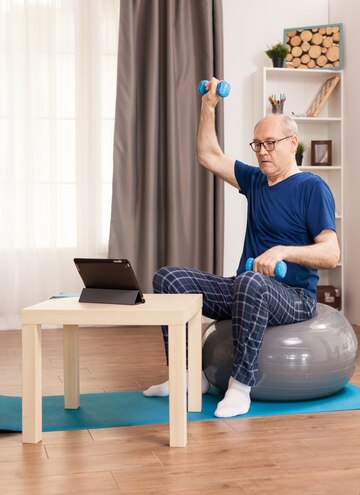
Follow a plan at home with resistance bands or light dumbbells
Live guidance from a trainer who adjusts exercises

The best programs combine low-impact resistance, joint safety and everyday movements. The National Institute on Aging calls the move from no exercise to regular resistance training one of the most powerful things an older adult can do for long-term health.
Sit-to-stands, seated marching and wall push-ups. No equipment and the lowest injury risk, so they suit beginners.
Gentle on joints. A simple way to build arms, legs and back once bodyweight moves feel easy.
Small dumbbells let you build up gradually. Add them only after you can do each movement correctly.
Moves that copy daily life: standing from a chair, climbing stairs, carrying shopping bags. Builds independence and prevents falls.
Slow, smooth movements put less stress on joints. Helpful with stiff joints, arthritis or old injuries.
Strength training matters more as we get older because it stops our bodies from naturally losing muscle, bone strength and energy.
After age 30, adults lose muscle mass quickly. Even worse, the studies in the NIH says that your actual muscle strength disappears 3 times faster than the muscle itself. Lifting weights or using resistance bands is the best way to keep your independence.
The Centers for Disease Control and Prevention (CDC) and Tufts University created a guide called Growing Stronger. Their research proves that strength training helps older adults manage arthritis pain, control blood sugar and help build stronger bones. It’s also a key part of fall prevention, because stronger leg and core muscles keep you steady on your feet.
This is also the same approach as ThriveCore’s senior fitness program which focuses on everyday movements. However, these exercises only work if you start at the right level for your current health.
The American College of Sports Medicine recommends training all major muscle groups at least two days a week. Starting slowly keeps your body strong and resilient.
Ask a doctor or fitness coach to review your balance, health history and recent injuries.
For the first two weeks, use body weight or very light effort to learn the movements.
Try 2 sets of 10 slow reps with light weights or bands.
Note how each workout went and how your body felt. The NIA says this helps you stay injury-free and confident.
Make workouts harder only when the current ones feel easy. If you feel sick, sore or in pain, stop and rest.
A 68-year-old beginner has mild knee arthritis. They spend the first two weeks doing simple chair squats and wall push-ups without using any extra weights. By the third week, they add a light resistance band to their routine. By the sixth week, they safely start using light dumbbells because they have learned how to do each exercise with perfect form.
A 60-year-old is already active and walks every day. They start using light dumbbells right away during their first week. They focus on everyday movements like stepping up on a bench and carrying heavy grocery bags. Since their joints do not hurt, they can safely increase the amount of weight they lift every two to three weeks.
Choose a senior fitness instructor or program that stresses safety, live feedback and workouts appropriate for your physical demands. The greatest approach to prevent injuries is proper screening.
Here’s what you can look for to find the right fit:
Strength training can help seniors build stronger muscles, bones and get better balance in about 8 to 12 weeks. A clinical trial published by the American College of Sports Medicine (ACSM) proves that an 8-week resistance training program can improve balance, sleep and physical strength.
Strength training can help seniors build stronger muscles, bones and get better balance in about 8 to 12 weeks. A clinical trial published by the American College of Sports Medicine (ACSM) proves that an 8-week resistance training program can improve balance, sleep and physical strength.
By month 3, you will have gained muscle strength and higher bone density to keep your joints stable. This means you’re less likely to trip and it helps you to get around safely.
Yes, strength training is safe and incredibly beneficial for seniors. Contrary to the common myth that lifting weights causes joint damage or injury, a systematic review in the Sports Medicine journal showed that resistance training has an exceptionally low injury rate, proving it’s a safe form of exercise.
The CDC says that adults aged 65 and older need to do strengthening activities at least 2 to 3 days each week.
Lifting light weights helps your body in more ways than one. The International Osteoporosis Foundation (IOF) confirms that resistance training can help build stronger bones. The American College of Rheumatology also shows it can help lower arthritis pain and stiffness. Starting slowly keeps you safe and helps you stay independent.
If you are over 69 and not active, talk to your doctor before you start. If you feel dizzy or have chest pain you should also get a medical checkup. If you feel breathless or notice sudden swelling of your joints during exercise, stop immediately.
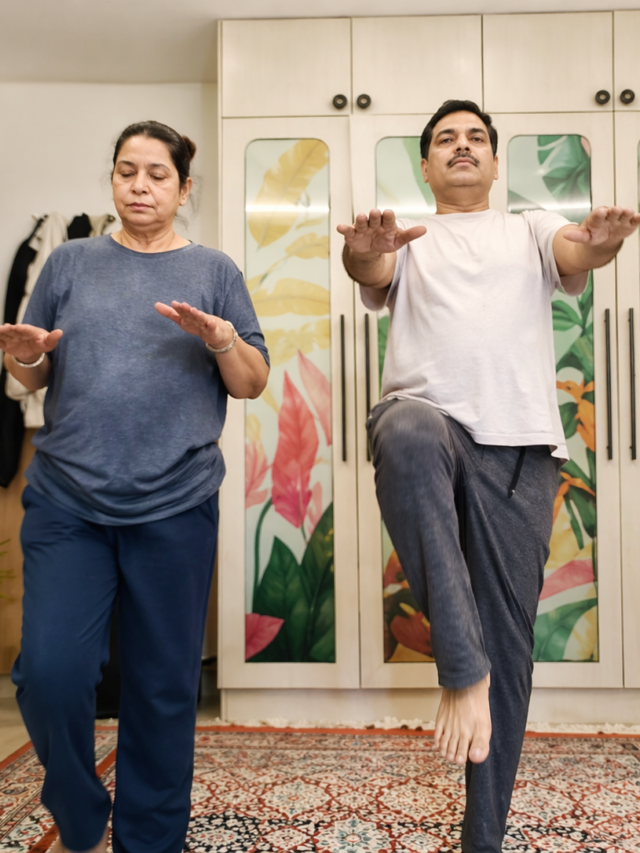
Strength training is one of the best ways for older adults to keep their independence. Lifting light weights or doing bodyweight exercises protects the body, lowers the risk of dangerous falls and makes it easier to move around.
But, seniors should avoid generic workout plans. While a free internet video can get a person moving, it cannot adjust to individual needs, speed or joint health. A truly safe exercise program must start slow and be specific to the individual’s body.
The next best step to building muscle safely, without injury, is to get a basic physical assessment from a certified fitness coach. A real coach can check a person’s form to make sure they are performing every movement correctly.
Yes, strength training is safe and very good for older adults with arthritis or osteoporosis when done correctly. Staying still can actually affect your body more. Lifting weights safely helps build strong muscles that protect your joints, and it also keeps your bones strong and healthy.
Older adults should lift weights or do strength exercises 2 to 3 days a week, always taking a rest day between workouts. The real key to seeing results is sticking with the routine for months, rather than doing too many workouts in a single week. It’s better to choose a simple schedule that you can actually follow, than a hard one you give up on after two weeks.
If you’re an older adult, the best way to start building muscle at home is by using your own body weight or light weights 2 to 3 times a week. Instead of lifting heavy things, you should focus on moving slowly, staying balanced and doing each exercise the right way.
Seniors can build muscle and become much stronger at 70, 80 and even 90 years old. But this is usually at a slower rate than young people. The most important things to improve strength as an older adult are consistency with workouts and gradual progression of difficulty over time.
You don’t need to go to a gym to stay strong and healthy as you get older. You can do safe and effective muscle building workouts at home easily. Instead of heavy equipment you can use your bodyweight, resistance bands or lightweight dumbbells . An online exercise program can be a good place to start.
A strength coach online can design a personalized workout plan for you. They watch over your movements to make sure you do the exercises safely and will help you stay motivated. A free workout video, however, is already recorded for anyone to watch. It is designed for a general audience so it can’t adapt to your specific body needs or provide any personal feedback.
Join hundreds of people who’ve already transformed their lives
Loading related posts...